

Welcome to our latest air travel news recap. This week, we are tracking a combination of record-breaking holiday passenger volumes, significant updates to TSA identification policies, and the operational impact of recent winter weather and labor actions.
Our goal is to provide you with a clear summary of these developments so you can navigate your upcoming trips with the most current information available.
Key Takeaways
- Winter Storm Devin, labor actions, and record holiday crowds triggered widespread cancellations, delays, and cascading disruptions across major U.S. and Canadian hubs.
- REAL ID enforcement for U.S. domestic flights tightens by May 7, 2025.
- TSA is expanding PreCheck touchless ID and facial-recognition kiosks; passengers can opt out of facial recognition and request manual ID checks at security.
Air Travel This Past Week
We’re in one of the busiest travel periods of the year just as a major winter storm, record passenger volumes, and new TSA rules all converge.
In this recap, we’ll look at how weather, crowding, and regulations are reshaping what it takes to get from curb to gate without chaos.
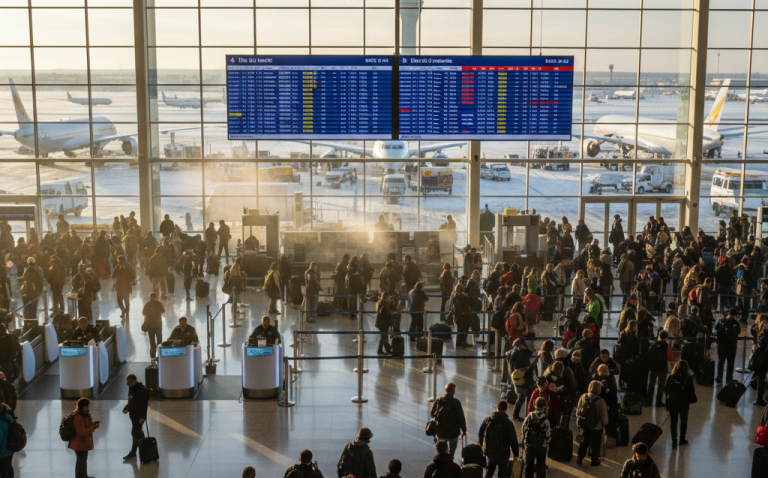
Weather, Crowds, and New Rules All Hitting at Once
This season, you’re not just dealing with winter storm flight cancellations; you’re also facing record TSA volumes, evolving ID requirements, and longer lines at almost every checkpoint.
The reality: cascading delays, missed connections, and last‑minute gate changes are becoming the norm rather than the exception. That makes it essential to:
- Book earlier flights in the day.
- Build real buffer time into layovers.
- Know your rebooking options before you arrive at the airport.
A service like Royal Airport Concierge can further reduce stress by guiding you through crowded terminals, helping you choose the right queues, and supporting you when plans suddenly change—especially at complex or unfamiliar airports.
Winter Storm Devin: How One Weather System Threw U.S. Airports Into Chaos
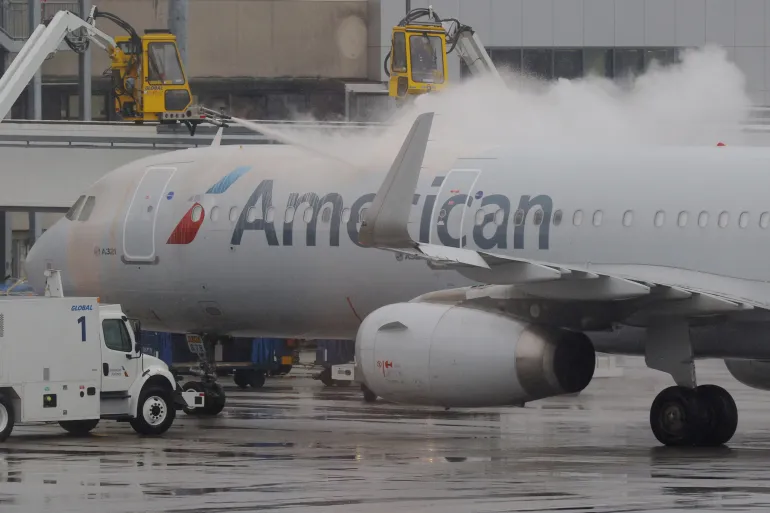
We’ve talked about how complex air travel has become; Winter Storm Devin is a case study in what happens when a powerful weather system collides with peak holiday traffic.
Here’s how it hit the network—and what it means for your future itineraries.
The Hardest-Hit Airports and Airlines
Winter Storm Devin slammed into some of the nation’s busiest hubs, turning normal holiday pressure into gridlock almost overnight.
- Major chokepoints included Chicago O’Hare, Denver, Newark, and Boston, where inbound aircraft and crews were quickly stranded out of position.
- Large network carriers with hub‑and‑spoke operations felt the pain most acutely. Their size usually helps them recover faster, but during Devin it also meant problems spread quickly across their networks.
Layer on top of that ongoing labor tensions—such as concerns around an Air Canada cabin crew strike and ground staff actions in Europe—and even connections that looked “safe” on paper suddenly became fragile.
What Mass Cancellations Really Mean for Your Itinerary
When a storm like Devin rips through major hubs, it doesn’t just cancel individual flights; it scrambles the entire system your itinerary relies on:
- A nonstop can disappear overnight.
- A “legal” connection can become impossible.
- Flights from sunny airports can still depart late because their aircraft or crews are stuck elsewhere.
You’re not just fighting weather; you’re competing with thousands of disrupted passengers all chasing a limited number of seats. Every hour you wait to rebook, your options shrink.
On top of that, rolling delays often push you into:
- Peak security times
- Crowded terminals
- Longer lines at customer service counters and gates
An airport concierge team can’t change the weather, but they can help you move quickly: escorting you through congested terminals, helping you find the right desk or rebooking channel, and keeping you focused on the best available alternatives.
Practical Rebooking and Connection Strategies
Smart rebooking can turn a bad day into a manageable one:
- Start with the app: As soon as disruption looms, use your airline’s app or website before joining a physical line. You can often switch flights, adjust connections, or reroute via nearby airports there first.
- Choose earlier departures and longer connections: Even if it’s less direct, an extra hour on the ground is often cheaper than a missed long‑haul flight.
- Use multiple channels at once: While you’re in line at the airport, call the airline, contact them via in‑app chat, or use social channels if they staff them for customer support.
- Know your acceptable Plan B in advance: Are you willing to take an extra stop, fly into a nearby airport, or overnight somewhere? Deciding this ahead of time speeds up decisions.
If you’re stuck in a large or unfamiliar hub, an airport concierge can help you transfer between terminals, re‑check bags if needed, and move quickly when a new connection opens up.
Record-Breaking Holiday Crowds at Airport Security
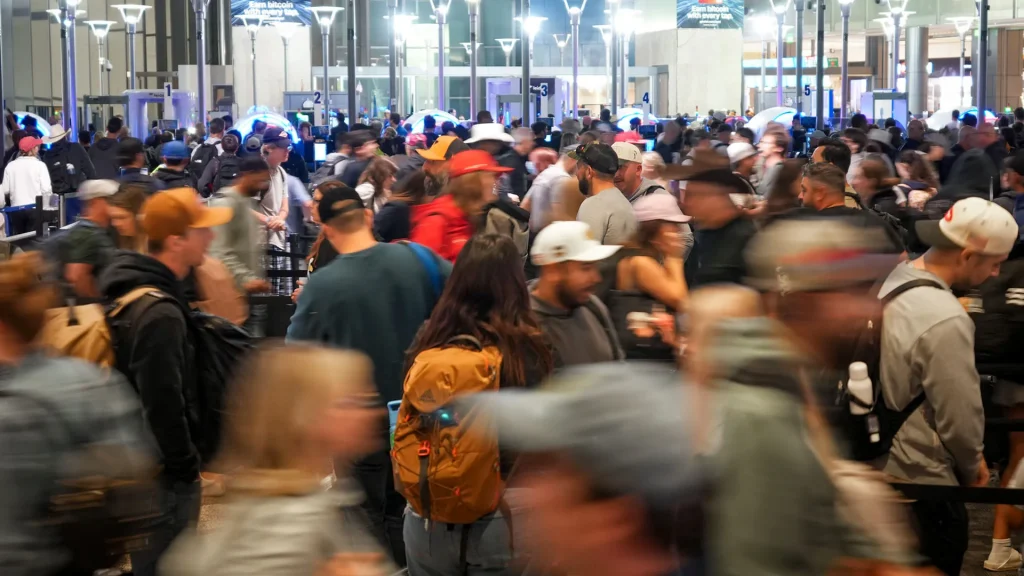
TSA’s latest passenger volume numbers show record‑breaking crowds pushing security checkpoints to their limits.
Even with extra lanes and staffing, the number of travelers is outpacing improvements.
TSA’s Latest Passenger Volume Numbers
In recent weeks, TSA has repeatedly broken daily screening records, with some days approaching or exceeding 3 million passengers nationwide.
For you, that means:
- More pressure on ID checkpoints, body scanners, and baggage X‑rays.
- Slower recovery when a single lane goes down or needs extra screening.
- Longer average waits even if you arrive at “the right time.”
These figures also help explain why TSA is tightening documentation rules and expanding automated identity tools: they’re trying to keep lines moving in the face of unprecedented volumes.
In crowded, unfamiliar airports, a concierge escort can help you quickly orient yourself, choose the right lane (standard, priority, or PreCheck where eligible), and avoid mistakes—like mis-packed bags—that trigger extra screening.
Why Lines Feel Longer Everywhere This Season
Several factors are stacking together:
- Airlines have added capacity, but checkpoint infrastructure and staffing can’t expand as quickly.
- More travelers are unfamiliar with current liquid, electronics, and document rules, which slows down each screening lane.
- Additional ID checks and secondary screenings add friction, even if they’re necessary from a security standpoint.
Families, infrequent flyers, and packed carry‑ons all contribute to the overall slowdown. The result: queues that seem to move in bursts and then stall without obvious reason.
Guided support doesn’t magically shorten the line, but it can help you avoid the most problematic times, choose smarter routes through the terminal, and arrive at the checkpoint properly prepared—so your part of the process is as fast as possible.
New TSA Rules and Identity Technology Every Traveler Should Know Before 2026
As you plan trips for the next few years, you’ll encounter new TSA policies that affect your ID, your wallet, and how your identity is verified at the checkpoint.
Here’s what’s changing and how it affects your time in the security line.
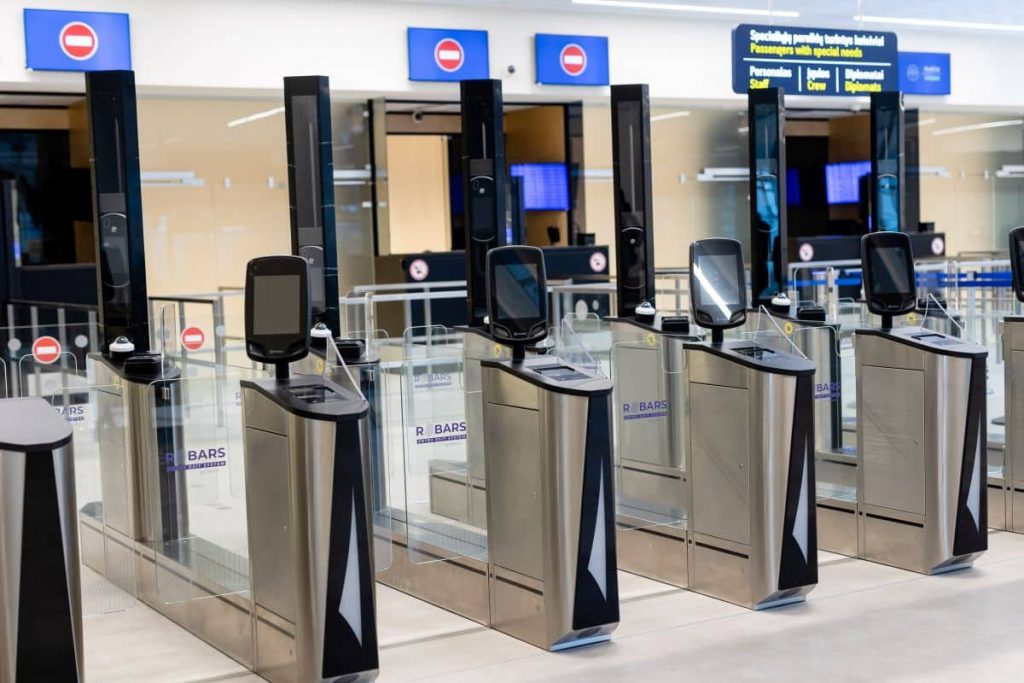
REAL ID, Fees, and TSA Confirm.ID Explained
By May 7, 2025, U.S. travelers will need a REAL ID–compliant license (or other acceptable ID such as a passport) to board domestic flights. Many states are charging additional fees—often in the $30–$45 range—for upgrading to a compliant ID, and lines at DMVs are expected to grow as the deadline approaches.
Separately, TSA’s Confirm.ID program allows certain airports and airlines to verify your identity in advance or electronically, reducing the chances of document surprises at the checkpoint. You’ll still need valid ID, but information such as your legal name, date of birth, and Known Traveler Number can be cross‑checked before you arrive.
The safest approach:
- Confirm ID requirements for every traveler in your group months in advance.
- Don’t assume your current driver’s license is compliant—check the marking and your state’s guidance.
- For complex itineraries, consider having a passport handy even for domestic segments.
A concierge team can’t fix an invalid ID at the last minute, but they can help you catch these gaps earlier and choose the right path through airport formalities.
TSA Facial Recognition: How It Works and How to Opt Out
At more U.S. airports, you’ll see cameras at TSA podiums and boarding gates. In most cases, these are used for a quick identity check:
- The system captures your image.
- It compares it to the photo on file (from your passport or other approved source).
- It returns a “match” or “no match” result to an officer, who still makes the final decision.
For domestic flights, you are allowed to opt out:
- Simply say, “I prefer a manual ID check, please.”
- You’ll be directed to an officer who visually checks your face against your physical ID, like before.
If you’re privacy‑conscious or uncomfortable with biometric systems, knowing this option exists can make the process feel less intimidating. A knowledgeable escort can also explain the flow step by step so you’re never surprised at the podium.
TSA PreCheck® Touchless ID: What It Changes (and What It Doesn’t)
For trusted travelers, TSA is rolling out PreCheck Touchless ID at select locations:
- You may scan your face or a digital ID at a dedicated podium.
- The system matches you to your reservation and PreCheck status without repeated boarding pass and ID checks.
This can:
- Reduce document handling.
- Make the PreCheck lane experience more seamless.
It does not:
- Replace the need for a valid REAL ID or passport.
- Eliminate security screening altogether.
- Guarantee short lines during peak times.
Used correctly, it’s one more way to shave minutes off your journey—especially when combined with good preparation and knowledgeable guidance through the terminal.
Strikes and Operational Shocks: Air Canada, KLM, and Beyond
Not all disruptions come from the weather.
Recent labor actions at airlines and airports underline how quickly operations can change—even under clear skies.
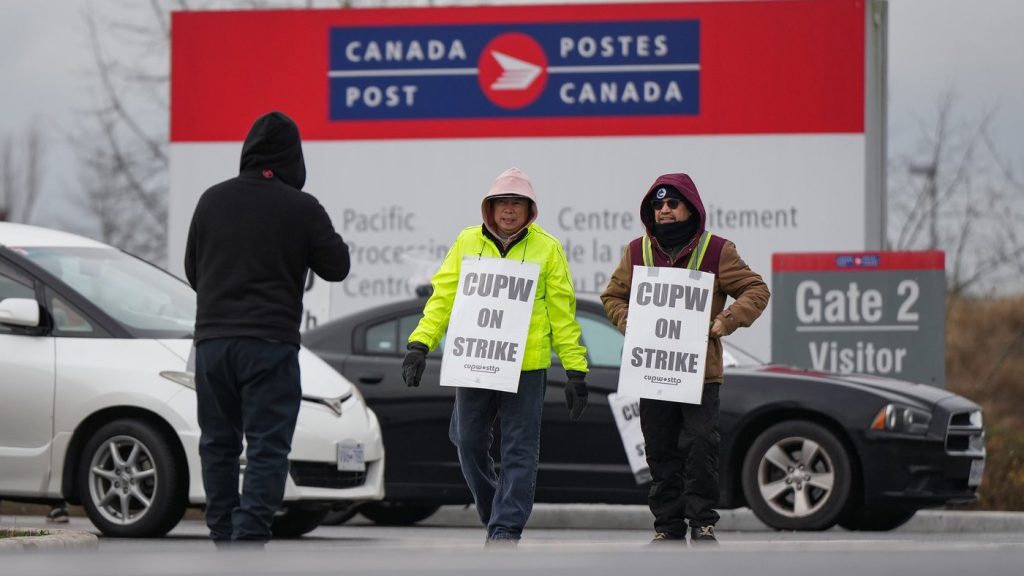
How Labor Disputes Ripple Through Global Air Travel
Strikes and slowdowns can involve:
- Cabin crew
- Ground handlers
- Security staff
- Airport maintenance and custodial workers
Examples from this season include:
- Air Canada labor disruptions affecting flights throughout North America.
- KLM and ground staff at Amsterdam Schiphol, impacting one of Europe’s key connecting hubs.
- City worker actions affecting cleanliness and maintenance at airports such as Philadelphia.
Because airlines rely heavily on partners, codeshares, and alliances, these disputes can affect you even when you’re not booked on the airline directly involved.
Why Even Well-Planned Trips Still Need Backup Options
A carefully constructed itinerary is still vulnerable to storms, strikes, and equipment issues.
To protect yourself:
- Research at least one alternate routing (and, if possible, a nearby airport) before you travel.
- Save airline and alliance customer-service numbers in your phone.
- Decide in advance what trade‑offs you’ll accept: extra stops, longer ground time, or an overnight if needed.
- Keep essential items—medications, chargers, one change of clothes—in your carry‑on.
When disruption hits, having a plan B and C ready lets you act quickly while others are still deciding what to do. A concierge team can then help you execute that plan on the ground.
How to Protect Your Time and Sanity at the Airport
You can’t control storms, strikes, or sudden rule changes, but you can control how prepared you are before you reach the airport.
Think of each trip as a small project: a bit of work up front can prevent hours of stress on travel day.
Smart Planning Checklist for Your Next Trip
Flights:
- Prioritize nonstop flights; if not possible, choose longer connections at major hubs and earlier departures.
- Add an extra night before cruises, major events, or international meetings.
Documents:
- Confirm passports, visas, and REAL ID–compliant documentation well in advance.
- Screenshot boarding passes, gate info, and hotel details.
- Store airline, insurance, and emergency contact numbers in your phone.
Security & Programs:
- Enroll in TSA PreCheck or Global Entry if eligible.
- Ensure your Known Traveler Number is correctly added to every reservation.
Disruption Kit:
- Pack medications, chargers, snacks, an empty water bottle, and a change of clothes in your carry‑on.
- Include printed copies of key itineraries and confirmation numbers.
Conclusion
Air travel is more crowded and complex than ever, but it doesn’t have to feel out of control.
By booking smarter flights, padding your connections, understanding evolving ID and security rules, and preparing for both weather and labor disruptions, you can stay well ahead of most problems.
Combine that preparation with targeted support—whether from trusted programs, airline tools, or a specialized concierge service—and your next journey can feel less like a gamble and more like a well‑planned project.
 English
  Español
  Français
  简体中文
简体中文  Русский
  Italiano
  العربية