

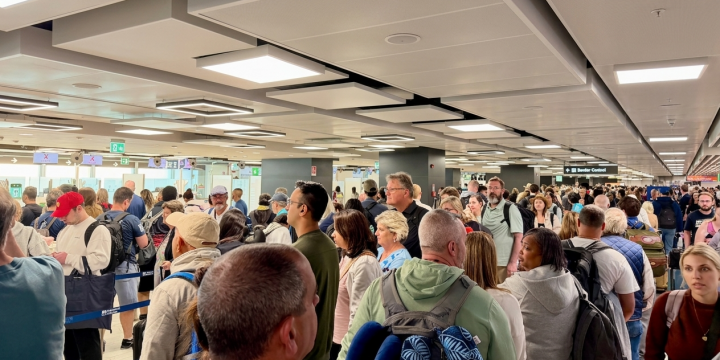
If you’re flying to Europe in 2026, here’s the truth nobody wants to tell you: the old “land, flash your passport, get a stamp, go” routine is officially dead. Europe rolled out a brand-new biometric border system, and U.S. travelers are right in the middle of it.
It’s called the Entry/Exit System (EES for short), and it’s already turning what used to be a five-minute passport check into a 30-minute (sometimes three-hour) ordeal at major hubs. The good news? Once you know how it works — and where to get proper EES airport assistance — you can sail through while everyone else sweats it out in line.
This is your complete 2026 guide. No jargon, no fluff.
What Is the EES, Really?
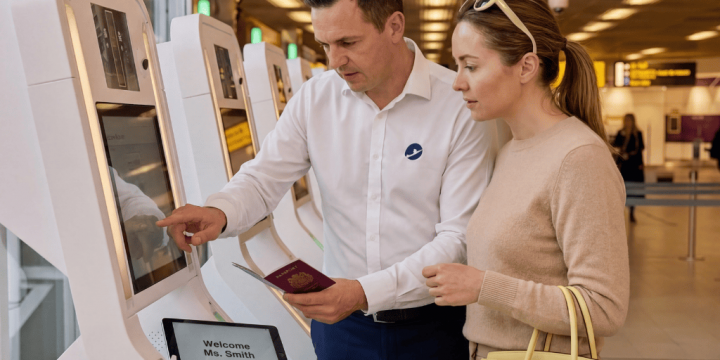
The Entry/Exit System is Europe’s shiny new digital border. Instead of getting a passport stamp when you arrive, a machine now takes your fingerprints, snaps a photo of your face, and logs your entry into a centralized EU database. When you leave, it logs that too.
According to the EU’s official border agency, the entry-exit system replaces passport stamping with digital records and is designed to make travel to participating EU countries more efficient and secure. As of April 10, 2026, the EES is fully operational at all external border crossing points of the countries using it.
In plain English: every time you enter or leave the Schengen Area as an American, a computer is now keeping score.
Who Has to Use the EES?
If you hold a U.S. passport (and you’re not a dual citizen of an EU country), you’re in. As of April 10, U.S. citizens and any other non-EU nationals will need to go through the EU’s new EES when traveling to 29 European countries. This applies to any visits lasting up to 90 days within a 180-day period.
U.S. citizens who hold dual citizenship with any EU member state or with any non-EU Schengen Area member (Iceland, Liechtenstein, Norway or Switzerland) do not need to use the EES.
What Countries Use the EES?
The system covers 29 European countries — the entire Schengen Area. That includes the big tourist favorites: France, Spain, Italy, Germany, the Netherlands, Greece, Portugal, Austria, plus Norway, Switzerland, and Iceland. The only EU members not in the system are Ireland and Cyprus.
How the EES Process Works at the Airport
Here’s what happens the first time you land in Europe under the EES:
- You walk to passport control — same as always.
- You’re directed to an EES kiosk (or a border officer with one).
- The machine scans your passport.
- It takes a photo of your face.
- It scans your fingerprints (all four fingers, both hands, depending on the country).
- You answer a few questions about the purpose of your trip, where you’re staying, and how you plan to pay your way.
- The system logs your entry — no stamp, just a digital record.
British travel journalist Simon Calder, who tested the system in Prague, described the questions you’ll face: “What’s the purpose of your trip?” with options including business, tourism, official meetings, medical treatment, and even spa stays. Then comes the sequence about admissibility: confirmation of accommodation, a return ticket, means of payment.
The whole process takes a few minutes per person — when everything works. And here’s the catch: it doesn’t always work.
The First Time Is the Worst Time
Your first EES entry is the longest. After that, your biometric data is stored for three years, so future trips just need a quick face scan or fingerprint. Children under 12 are registered but only have their photograph taken. EES is free.
The Reality: Long Lines, Missed Flights, and Tech Glitches
This is where it gets messy. The phased rollout that started in October 2025 has been, to put it diplomatically, “bumpy.”
A report from Airport Council International (ACI) Europe found that the progressive rollout of the biometric system has resulted in border control processing times at airports increasing by up to 70 per cent, with waiting times of up to three hours in peak traffic periods. Even worse, in some cases, delays have resulted in passengers missing their flights.
Airports in France, Germany, Greece, Iceland, Italy, Portugal and Spain are especially badly impacted by EES-related delays. Lisbon Airport had it so bad that Portugal suspended the system’s use at Lisbon Airport in December 2025 after widespread delays. In January 2026, 24 officers from the National Republican Guard were stationed at the airport to help ease pressure at border checkpoints.
The problems are a perfect storm: understaffing at border control, unresolved technical glitches with biometric kiosks/eGates, and limited uptake of the Frontex pre-registration app.
And it might get worse before it gets better. European airport organizations are proposing a delay to avoid potential four-to-six-hour queues during the peak summer season. Four to six hours. After a transatlantic flight. With your kids. Yeah.
EES vs. ETIAS: Don’t Confuse Them
A quick clarification, because everyone mixes these up:
- EES is the biometric border check you do at the airport when you arrive. It’s automatic and free.
- ETIAS is a travel authorization you’ll apply for online before you fly, similar to the U.S. ESTA. It’s separate.
According to Lufthansa, ETIAS will become operational in the last quarter of 2026. From the end of 2026, visa-exempt non-EU nationals (e.g. from the USA, Canada, Australia, Japan) must apply for an ETIAS authorisation before entering the European Schengen Area. For now, only EES is live.
How to Prepare for Your EES Border Crossing
Here are the practical things you can do before you fly:
1. Make Sure Your Passport Has a Chip
Travelers should use a biometric passport — U.S. passports issued after 2006 already include the needed chip. If yours is older, renew before you fly. The chip lets you use self-service kiosks, which are faster than waiting for a human officer.
2. Pad Your Connection Times
If you’re flying through one European city to another, your EES check happens at your first point of entry. Don’t book a 60-minute connection. Aim for at least 2.5 to 3 hours during the busy season.
3. Know What to Have Ready
You’ll be asked about your hotel, return flight, and how you’re funding the trip. Have screenshots or printed confirmations on your phone: hotel reservation, return flight confirmation, a credit card, and the address where you’ll be staying.
4. Consider Professional EES Airport Assistance
This is where the smart travelers separate themselves from the crowd. At Royal Airport Concierge, we’ve built our entire EES service around the chaos of the new system. A trained greeter meets you at the gate, walks you through the kiosk, helps with the questions, manages your luggage, and routes you through the fastest available lane — whether that’s a fast-track corridor, priority processing, or a VIP channel reserved for premium clients.
For families, executives, frequent travelers, and anyone who values their time after a 9-hour flight, EES airport assistance isn’t a luxury anymore. It’s the difference between starting your vacation relaxed or starting it exhausted, dehydrated, and two hours behind schedule.
Which European Airports Are Best (and Worst) for EES?
Based on the rollout so far, here’s how major U.S.-to-Europe gateways are performing:
- Paris CDG, Frankfurt FRA, Amsterdam AMS, Rome FCO, Madrid MAD: All invested heavily in EES kiosks, but transatlantic traffic creates pile-ups, especially mornings.
- Lisbon LIS: Had to suspend EES temporarily in late 2025. Still recovering.
- Barcelona BCN, Athens ATH, Venice VCE: Slower adoption, more manual processing, longer lines.
- Smaller regional airports: Often have just one or two kiosks, so a full transatlantic flight goes through one or two machines.
What Happens If You Refuse the EES Scan?
Short answer: you’re not getting in. EES is mandatory — those who refuse to have their biometric data collected will be denied entry. There’s no opt-out for non-EU travelers. The system stores your data for three years from your last entry, and after that it’s automatically deleted.
EES airport assistance: Don’t Get Caught Off Guard
The EES is here, it’s permanent, and it’s not going away. For most American travelers, the long-term picture is fine — after your first registration, future entries will likely be faster than the old passport-stamp days.
But the first six months of full operation (April through October 2026) are going to be rough. Lines will be long, kiosks will malfunction, summer crowds will collide with a new system still learning to walk. The travelers who prepare — who have their documents ready and book professional EES airport assistance — will breeze through while everyone else fumes in line.
If you don’t want EES to eat the first day of your trip, book your meet and greet service with Royal Airport Concierge. We operate at every major European hub — CDG, FCO, MAD, AMS, FRA, BCN, LIS, ATH, and more — and our greeters know exactly how to navigate the new system at each one.
Your vacation should start the moment you land. Not three hours later.
Preguntas frecuentes
Do I need to register for EES before I fly? No. EES registration happens automatically when you arrive at the European border. You don’t need to apply or pay anything in advance.
How long does EES registration take? The first time, expect 3-7 minutes per person at the kiosk, plus waiting in line — which during peak times has stretched to 3 hours or more. Subsequent entries are much faster.
Is EES the same as ETIAS? No. EES is a biometric border check at arrival. ETIAS is a separate online travel authorization expected late 2026.
Will my fingerprints be stored forever? No. Your data is stored for 3 years from your last entry, then automatically deleted.

 Español
  English
  Français
  简体中文
简体中文  Русский
  Italiano
  العربية