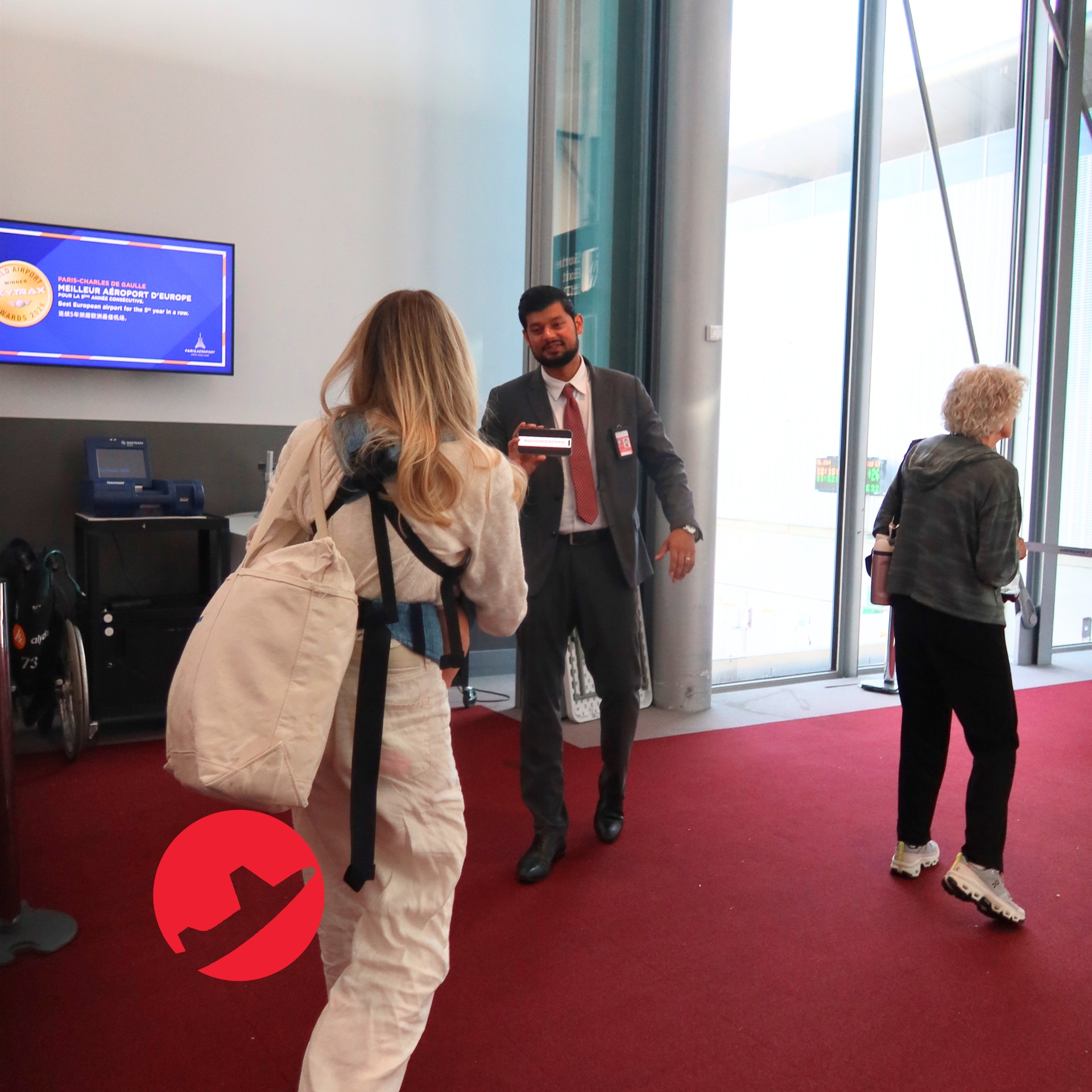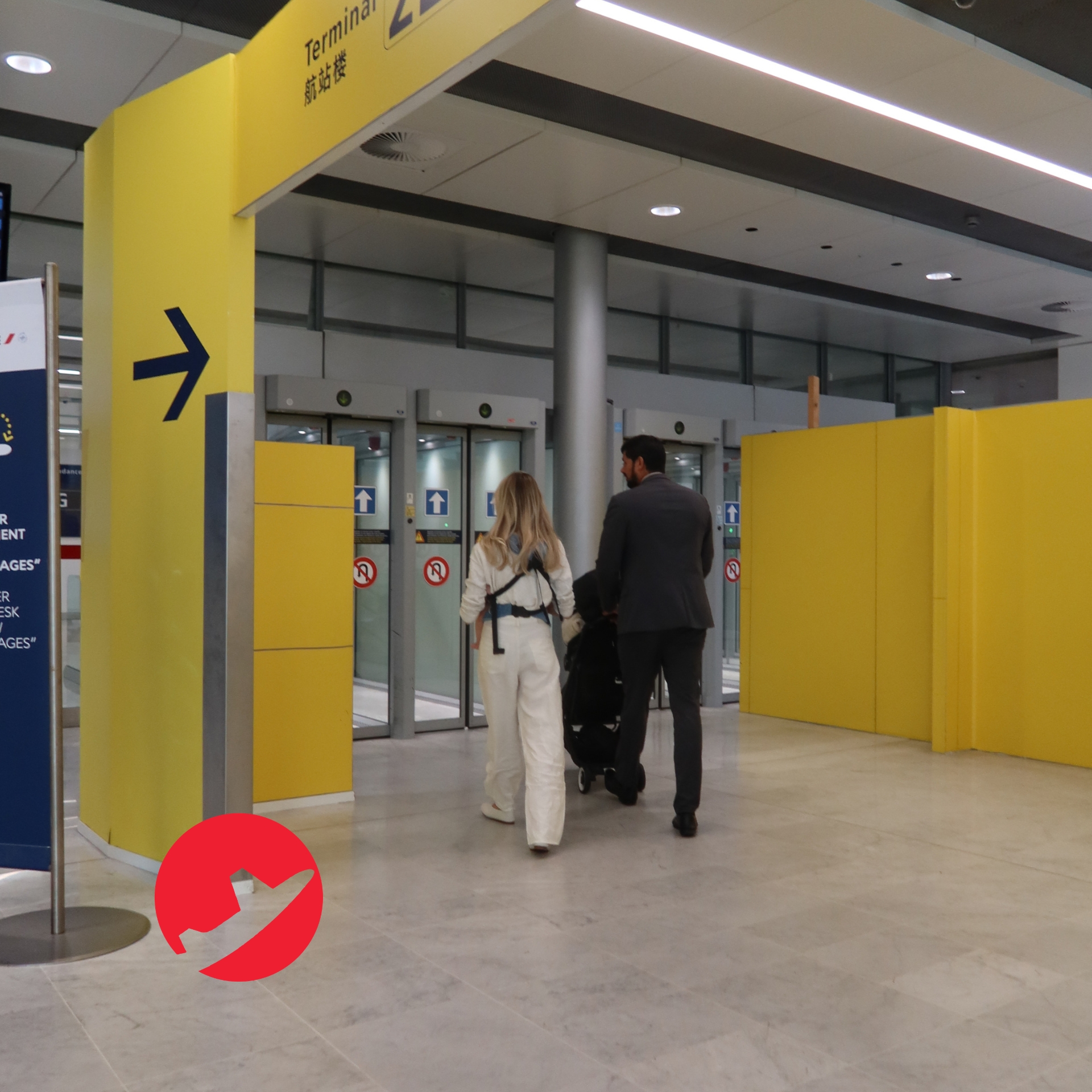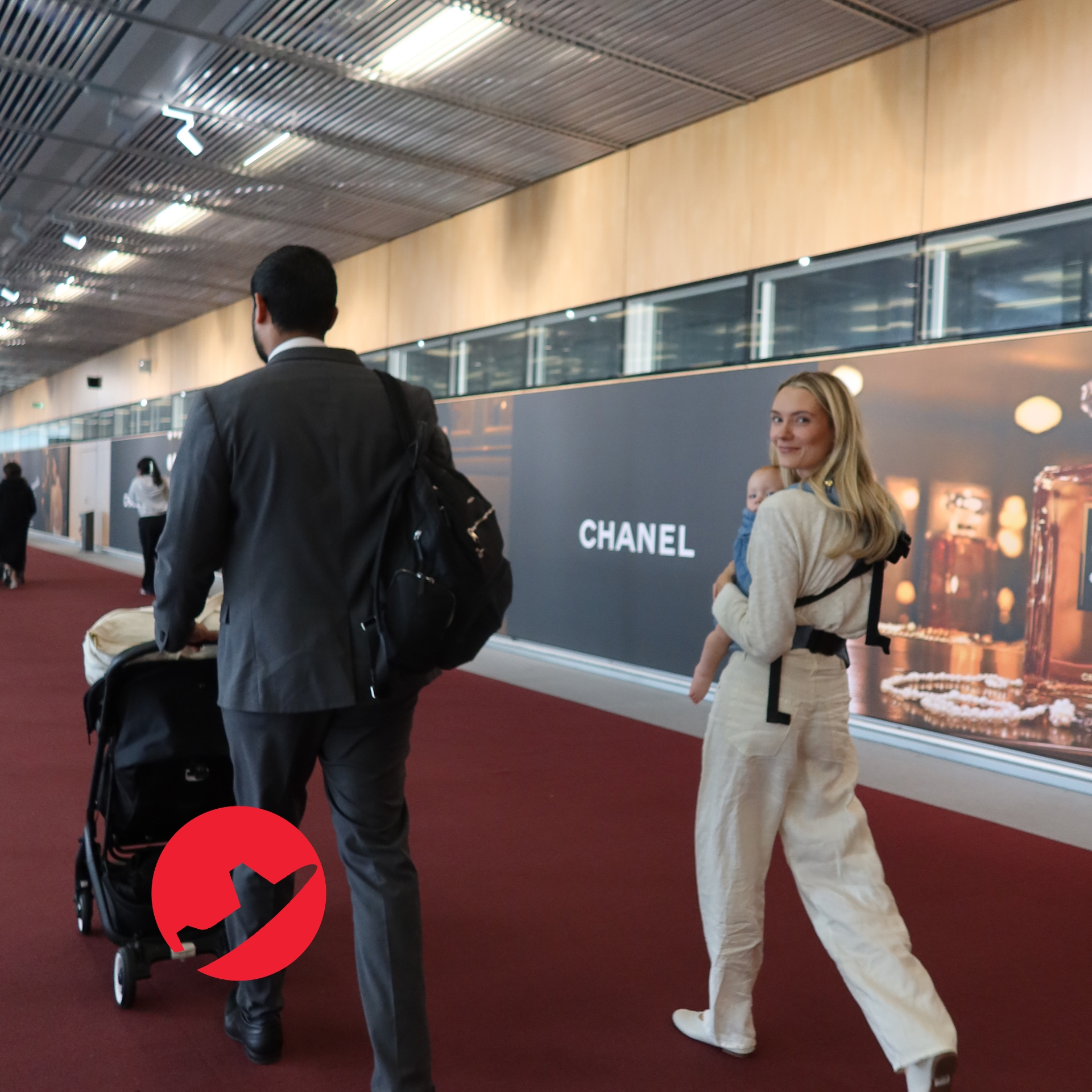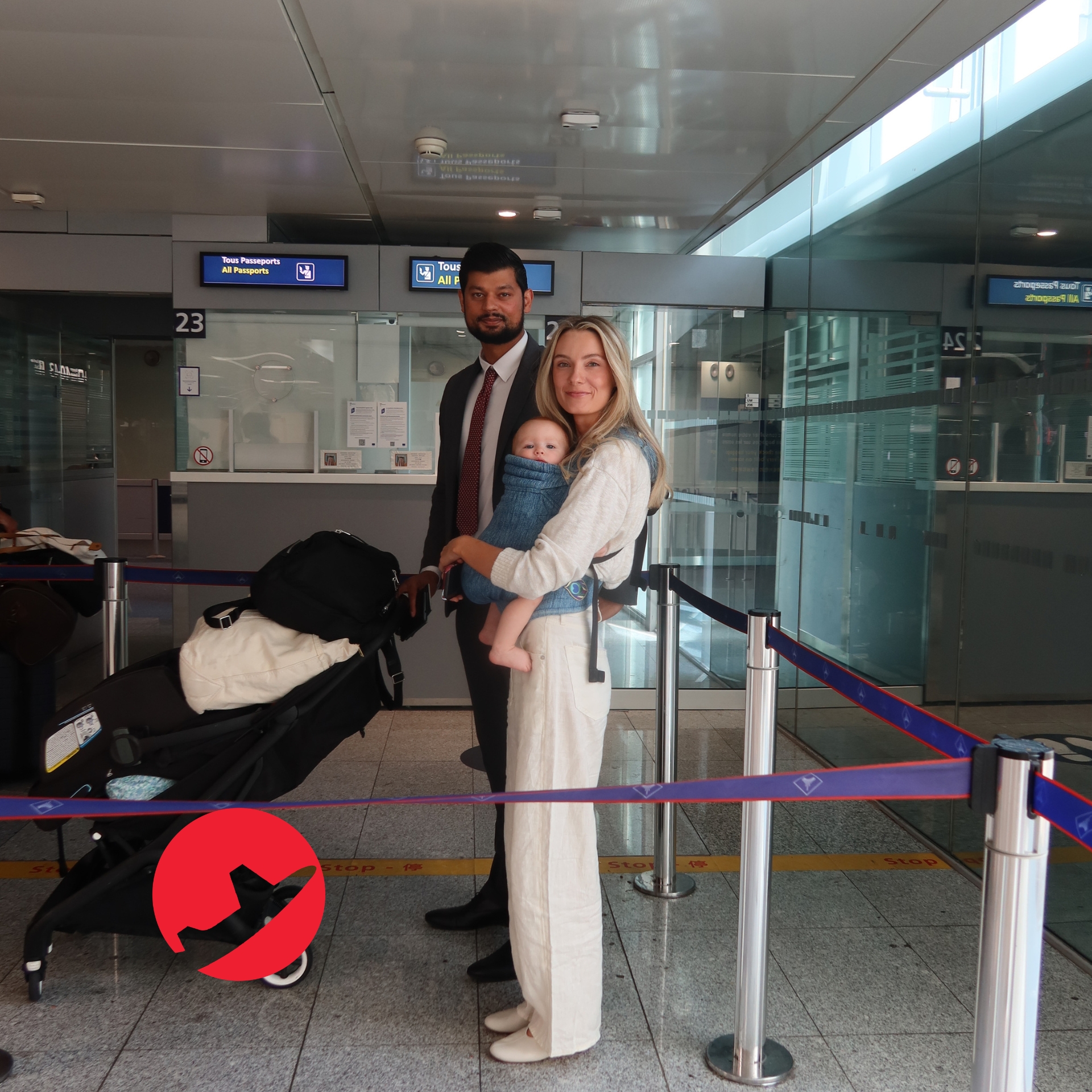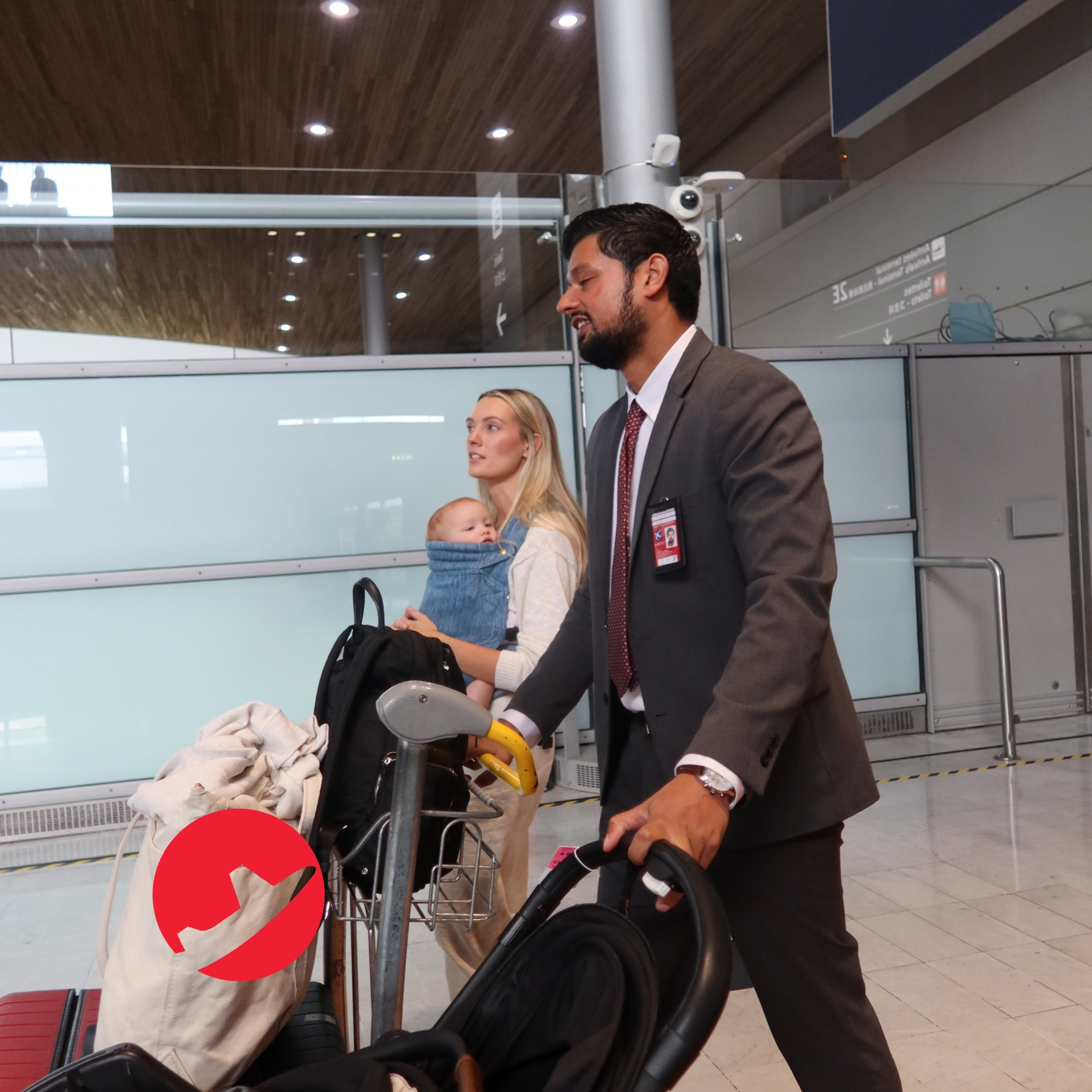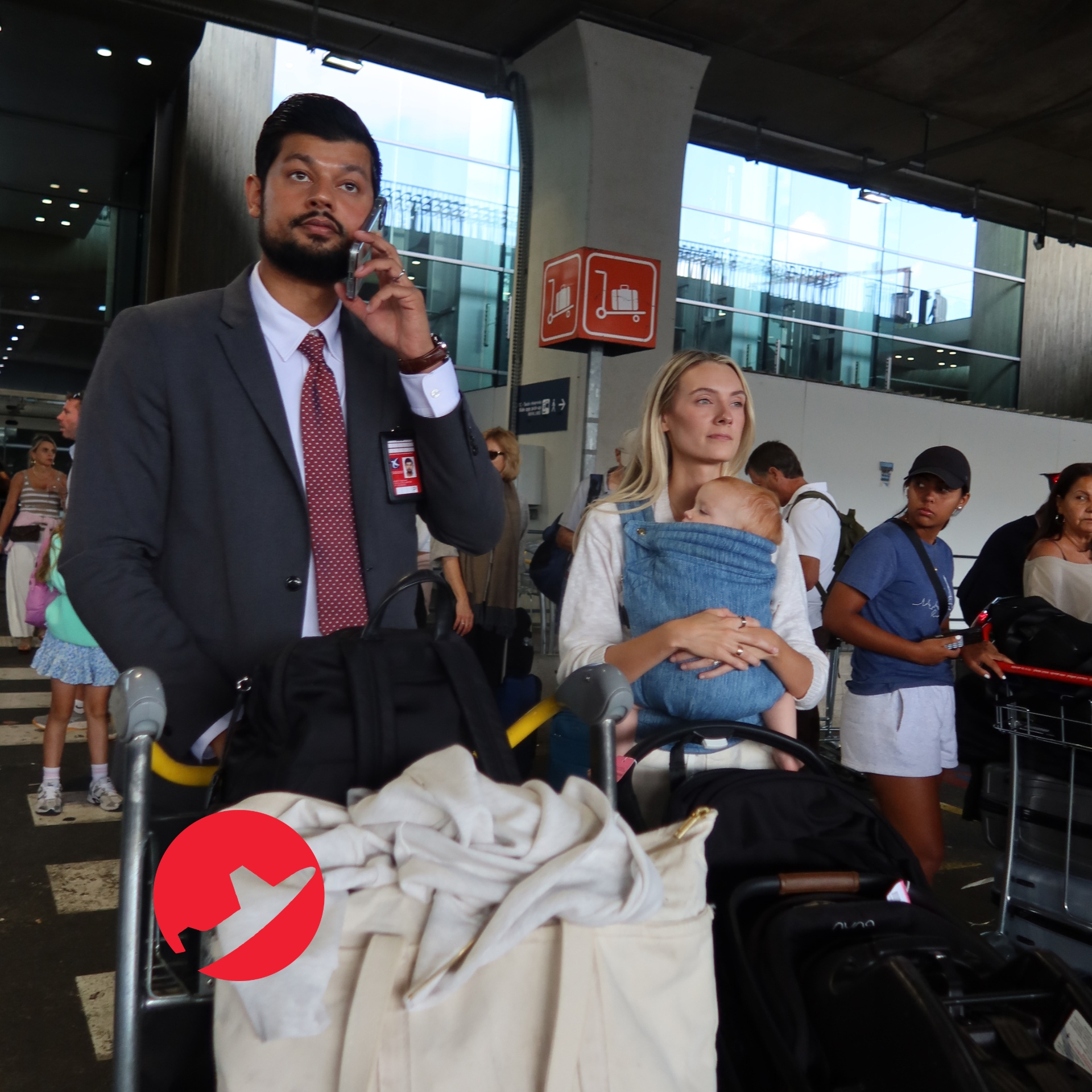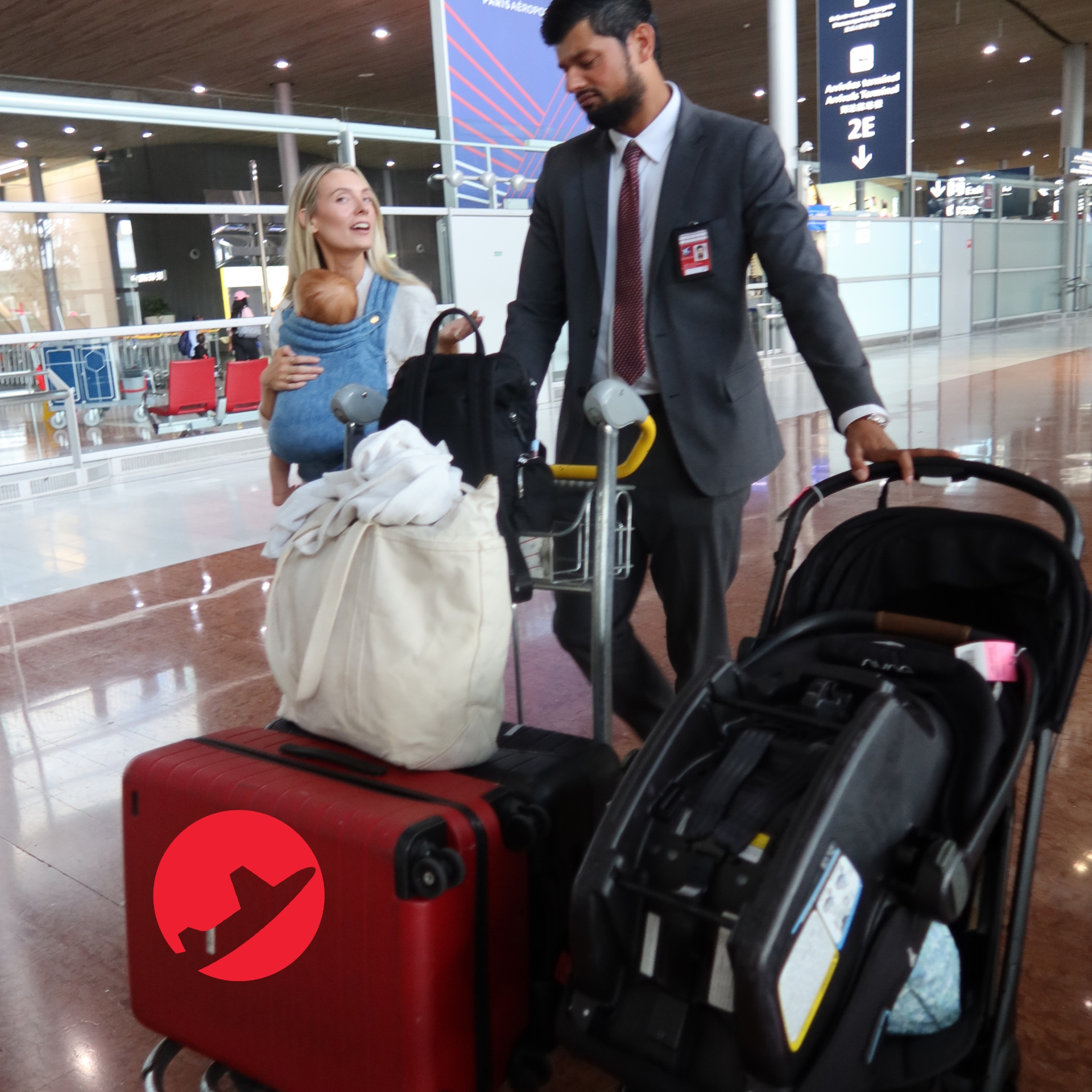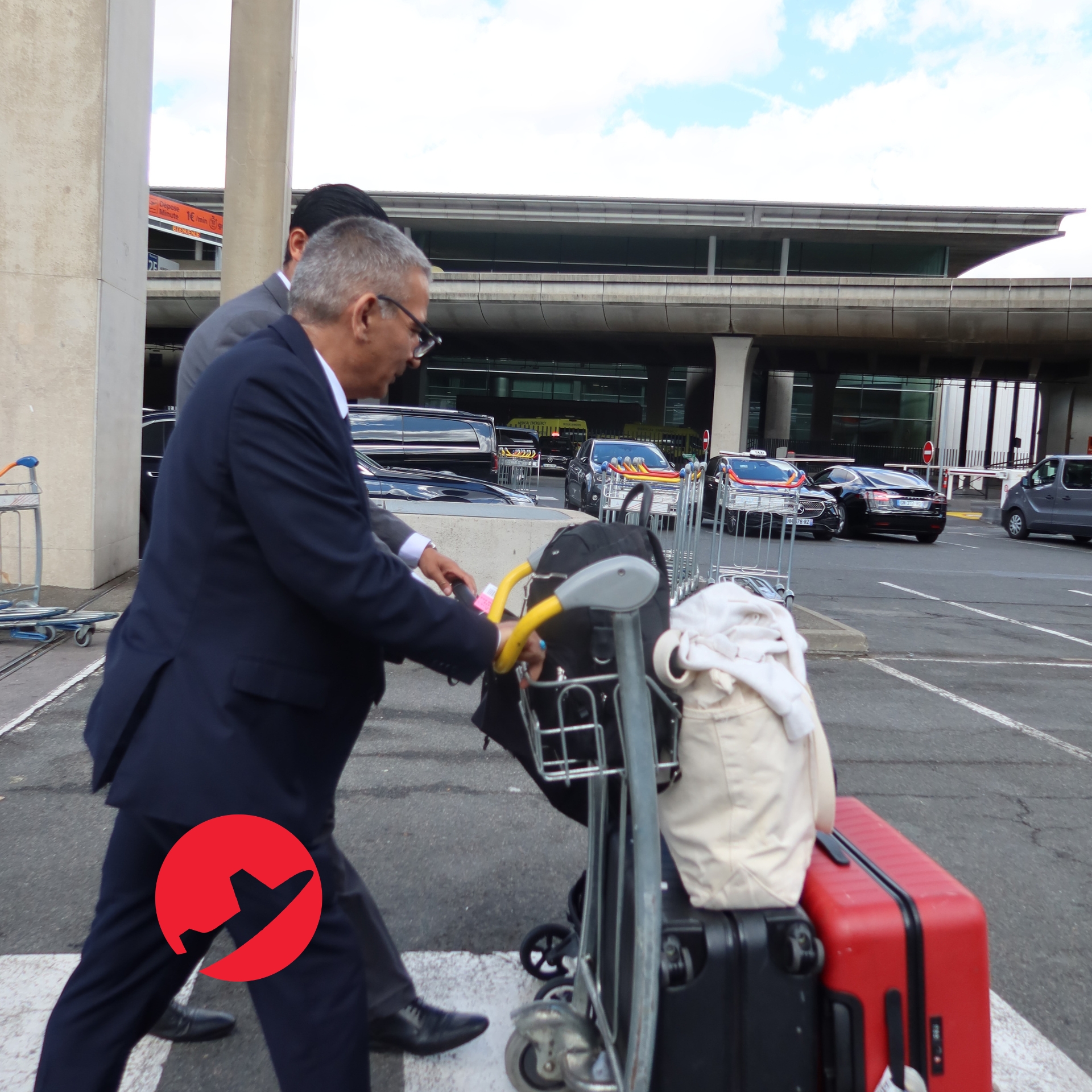

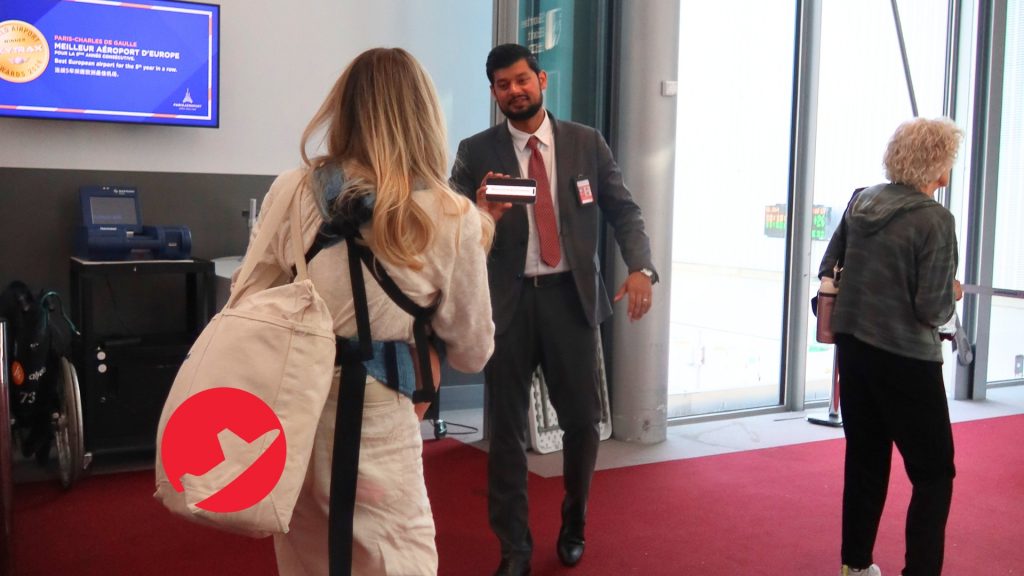
On 19 August 2026, a long-haul flight touched down at Paris Charles de Gaulle. On board: one adult travelling alone, one baby, one stroller, one car seat and two checked bags. In a few minutes after being met at the gate area, all of it — parent, baby, stroller, car seat, bags — was loaded into a car outside Terminal 2E and on its way into Paris.
We photographed the whole thing, with permission, because it is the single most common question we get asked and the hardest one to answer with words alone: what do Charles de Gaulle international arrivals actually look like on the ground right now?
This is that answer. Not a brochure version — the real sequence, the parts that go slowly, the parts that changed in 2026, and what you can do about any of it.
Charles de Gaulle international arrivals, terminal by terminal
CDG is not one airport. It is three terminal complexes strung along several kilometres of the Roissy plateau, and which one you land in determines almost everything about your first hour in France.
- Terminal 1 — the circular one. Compact, dated, and mostly used by Star Alliance carriers.
- Terminal 2 — the big one, split into halls A through G. Most long-haul international arrivals land here.
- Terminal 3 — low-cost and charter traffic.
If you are flying in from North America, the Gulf, Asia or Africa on Air France, Delta, KLM or a SkyTeam partner, you are almost certainly landing in CDG airport Terminal 2E. It is the newest and largest of the international halls, and it is subdivided again into three boarding areas: Hall K, Hall L and Hall M (also called the S3 and S4 satellites).
That subdivision matters more than most travellers expect. Hall L and Hall M are satellite buildings — physically separate from the main 2E structure. If your aircraft parks at one of them, you do not simply walk off the jet bridge and into passport control. You walk to an automated shuttle (the LISA people-mover), ride it under the apron, and then start the walk to the border.
This is the part that surprises people. Your flight has landed. Your phone says you have arrived. And you are still fifteen to twenty minutes of walking and riding away from the first passport officer.
Practical note: your boarding pass and the arrivals board show the terminal, not the hall. If the aircraft door opens onto a bus instead of a jet bridge — which happens at CDG more often than at comparable hubs — add time.
The border is the part that changed in 2026
For years, the honest advice about CDG airport immigration was “it depends on the hour.” That is no longer the whole story.
Since April 2026, the EU’s Entry/Exit System (EES) has been in force at external Schengen borders, including every arrivals hall at Charles de Gaulle. If you are a non-EU national — American, British, Canadian, Australian, Emirati, Japanese, and so on — your first crossing under EES is not a passport stamp. It is a biometric enrolment: your passport data, a facial image and fingerprints are registered into a central file that replaces the ink stamp entirely.
Two things follow from that, and both are worth internalising before you fly.
First: the first time takes longer than every time after. Enrolment is a one-off. Subsequent crossings are a check against a record that already exists. The queue you meet in 2026 is disproportionately made up of people doing this for the first time, at a terminal where nearly every arriving passenger is doing it for the first time too.
Second: nobody can skip it. This is where a lot of online advice is simply wrong. EES enrolment is a legal requirement at the border. No service, no status, no ticket class removes it. What can change is which channel you stand in and whether someone is beside you when the kiosk asks a question you did not expect.
How bad has it actually been? In a joint open letter to the European Commission dated 1 July 2026, ACI Europe, Airlines for Europe and IATA wrote that “waiting times at border control have increased significantly, now reaching up to 5 hours during peak traffic periods.” That is an industry-wide peak figure across European hubs, not a CDG average — but it tells you the shape of the risk. Terminal 2E, which carries the heaviest first-time enrolment load at CDG, is exactly the kind of hall that letter is describing.
If you are travelling with children
The rules are more humane than most parents expect, and almost nobody knows them.
Under EU rules, children under the age of 12 are exempt from the requirement to give fingerprints. That is a genuine, written exemption — not a discretionary kindness from whichever officer you get.
What still applies, per the European External Action Service, is that for under-12s “a facial image and document checks still apply.” So your child is still enrolled, still photographed, still checked. You are not walking past the border with a sleeping infant and a wave.
In practice this means the family lane at CDG moves faster than the general queue for the fingerprint step and then stalls at the facial capture, because taking a compliant facial image of a nine-month-old who has just spent eight hours in a pressurised cabin is not a fast operation. On 19 August, this was the single longest segment of the arrival — and it was still measured in minutes rather than hours, because the enrolment happened in a priority channel rather than at the back of the main hall.
Baggage claim and customs: the quiet time sink
Once you clear the border, CDG airport baggage claim is a second, separate wait that most arrival estimates forget to include.
Terminal 2E’s belts sit below the border hall. Typical first-bag delivery at a hub of this size runs in the twenty-to-forty-minute range after the aircraft is on stand, which means that if you cleared immigration quickly, you will now stand still — and if immigration was slow, your bags may already be circling. There is no way to know in advance which of those two situations you are walking into.
Oversized items — strollers, car seats, sports equipment, musical instruments — are the exception, and they are the item that catches families out. They do not come out on the standard belt. They arrive at a separate oversized-baggage counter, often on a different schedule, occasionally in a different corner of the hall. If you gate-checked a stroller expecting it at the jet bridge and it did not appear there, this is where it went.
CDG airport customs is the last physical step and, for the overwhelming majority of arriving passengers, the fastest. France operates the standard two-channel system: green for nothing to declare, red for goods above the allowance. Green is a walk-through. Spot checks happen, they are quick, and they are the reason you should not put your passport away until you are actually out of the doors.
If you are arriving with more than €10,000 in cash, commercial goods, or anything above the duty-free allowance, you use the red channel and you should budget real time for it.
What a real Terminal 2E arrival looked like
Here is the sequence from 19 August 2026, as photographed.
The meeting. The greeter was already positioned in the arrivals corridor with a name board before the passengers reached it. This is the difference that is hard to convey in a service description: there is no scanning a crowd, no phone calls, no “I think I see you.” You walk off the aircraft and the first person you make eye contact with is expecting you by name.
The walk. From the gate area toward passport control, the greeter took the stroller and one bag. Anyone who has pushed a stroller through a satellite terminal while wearing a laptop bag and holding a passport in their teeth understands why this is the moment the day changes.
The border. Priority channel, EES enrolment, facial capture for the baby, document check. The greeter stayed at the kiosk for the whole sequence — not to speed the officer up, which is not possible, but so that no one had to choose between holding a baby and operating a biometric terminal.
Baggage. Two checked bags plus the oversized counter for the car seat. The greeter tracked both while the family sat down.
The curb. Bags to the vehicle, car seat handed to the driver, stroller collapsed and stowed.
Elapsed time from the moment the greeter made contact to the moment the car doors closed: 45 minutes.
Two honest caveats about that number, because it gets misquoted. It is measured from the meeting point, not from the aircraft door — taxiing, deplaning and the walk to the meeting point are not inside it. And it was a mid-afternoon arrival, which at CDG runs longer than an early-morning one, not shorter. It is a real number from a real day, not a promise about yours.
If you have a connection: the 2E to 2F problem
A large share of CDG arrivals are not arrivals at all — they are the middle of a journey. If you are searching for Charles de Gaulle layover advice, this is the part you need.
CDG airport Terminal 2E to 2F is the single most common connection at the airport, because 2E takes the long-haul inbound and 2F handles Schengen short-haul onward. The two are connected airside, and the transfer involves a walk plus, from the L and M satellites, a shuttle ride.
The complication is directional. If your onward flight is inside the Schengen area, you clear immigration at CDG, not at your final destination — so the EES queue sits between your two flights, not after them. If your onward flight is outside the Schengen area, you may stay airside and skip the border entirely.
Air France’s published minimum connection time for 2E-to-2F is in the sixty-minute range. Under current border conditions, treat sixty minutes as the number that is technically legal rather than the number that is comfortable. Ninety is realistic. Two hours, if you are connecting with children and checked bags, is what we would actually plan around.
Six things that make a CDG arrival easier
- Find out your hall, not just your terminal. 2E-K is a different arrival to 2E-M. The airline app usually shows the stand.
- Keep passports out and accessible until you are through customs. You will need them at the border, potentially at customs, and often at the hotel car.
- Do the EES enrolment with your documents already open. The kiosk asks for the biometric page.
- Do not gate-check a stroller if you can avoid it. At CDG it frequently goes to the oversized counter rather than the jet bridge.
- Arrange ground transport before you land. The taxi rank at 2E is well organised but it is one more queue at the end of several.
- If you are connecting, add thirty minutes to whatever the airline told you. Especially in peak season.
Frequently asked questions about CDG arrivals
How long does it take to get through Charles de Gaulle after landing? There is no reliable single figure in 2026. Between deplaning, the walk from a satellite hall, EES enrolment, baggage and customs, a realistic planning window for a Terminal 2E arrival is ninety minutes to two hours, with peak periods running longer.
How long does Paris airport customs take? Customs itself is usually the quickest step — a walk through the green channel. The time is spent before it, at passport control and baggage claim.
Can you skip immigration at CDG? No. EES registration at the external Schengen border is mandatory for non-EU nationals and cannot be waived by any service. What a meet and greet service provides is access to a priority channel and assistance through the process — not an exemption from it.
Do children need to register for EES? Children under 12 are exempt from giving fingerprints, but a facial image and document checks still apply.
Which terminal do international flights arrive at CDG? Most long-haul international flights arrive at Terminal 2E, split across Halls K, L and M. Terminal 1 and Terminal 2A/2C also handle international arrivals depending on the carrier.
Is Terminal 2E connected to Terminal 2F? Yes, airside and landside, via a walk and — from the satellite halls — an automated shuttle. Allow more time than the published minimum connection.
The short version
Charles de Gaulle is a well-run airport having a genuinely difficult year at its borders. Nothing about the 19 August arrival was unusual: the flight was on time, the officers were efficient, the bags came out. The difference was that at every point where a solo parent with a baby would normally have had to choose between two things they could not do at once, somebody else was there to take one of them.
That is the entire proposition, and forty-five minutes is what it looked like on the day.
Planning your own arrival at Charles de Gaulle? See how our CDG meet and greet works

 English
  Español
  Français
  简体中文
简体中文  Русский
  Italiano
  العربية