

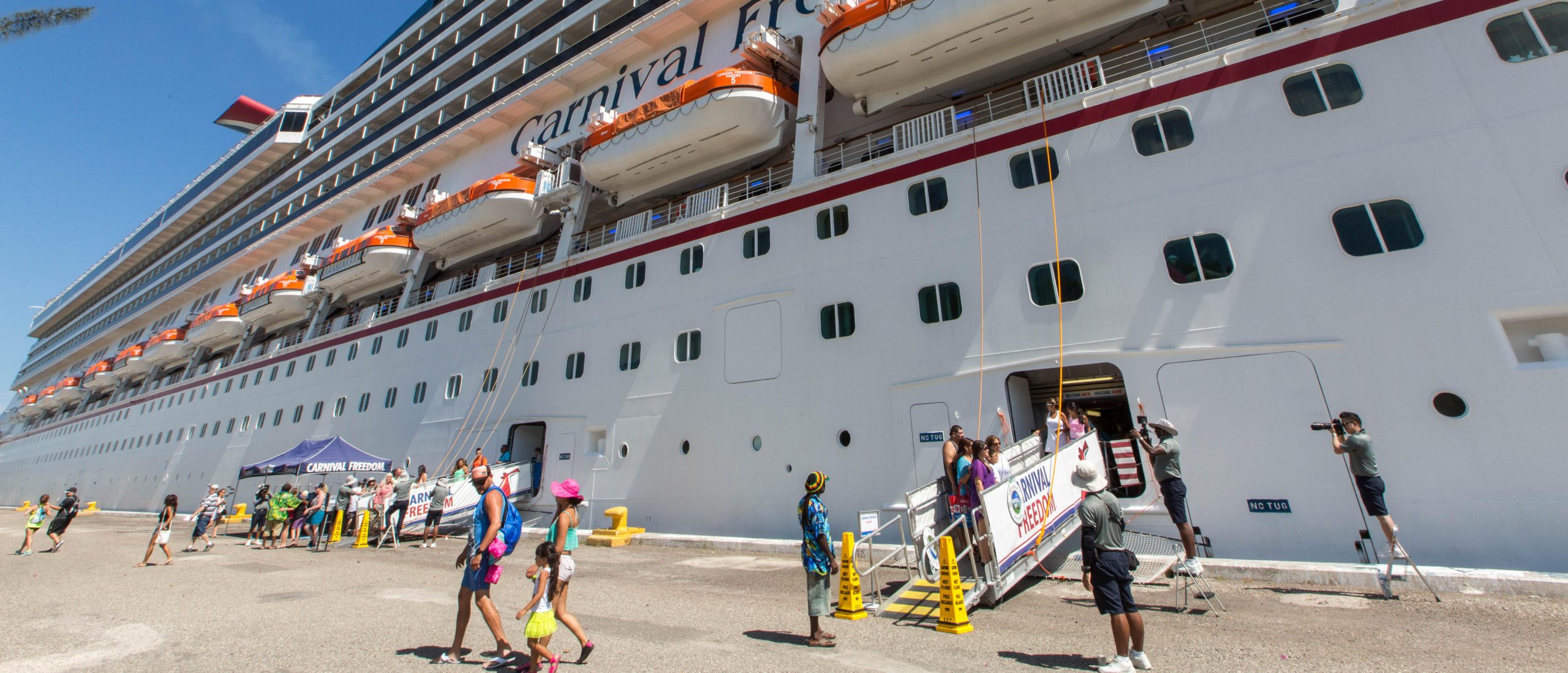
Picture this. It’s July. You’ve spent the entire year dreaming about this Mediterranean cruise — the one you booked back in January, the one your kids have been counting down to, the one that’s finally going to be your real summer vacation. The suitcases are packed, the shore excursions are booked, you’ve got dinner reservations at the specialty restaurants on night two and night five. You land at Rome Fiumicino at 8:00 AM. Your ship leaves Civitavecchia at 5:00 PM.
You think you have nine hours. You don’t.
Because summer 2026 is the first full peak cruise season under a new variable nobody is talking about loud enough — and it has a name: EES.
The EU’s new biometric border system is officially the most disruptive change to European travel since the Schengen Area itself was created. And nowhere does that disruption hit harder than on summer cruise passengers flying into Europe — because missing your window in July doesn’t mean a delayed afternoon. It means watching the ship you’ve been waiting all year for pull away from the dock without you.
Don’t let EES ruin your summer cruise. Here’s everything you need to know — and exactly how to protect the vacation you’ve been planning for months.
Why Summer 2026 Is the Worst Time to Be an EES Cruise Passenger
There’s never a good time for biometric border chaos, but summer 2026 is uniquely bad.
According to industry reports tracking summer 2026 cruise demand, the Mediterranean is still the strongest European cruise market, with Italy, Spain, France, and Greece pulling record bookings. Royal Caribbean alone has expanded its summer Mediterranean lineup with its third Icon Class ship and a new exclusive beach club opening in Santorini.
That means more transatlantic flights, more first-time European cruisers, and more passengers hitting EES kiosks at exactly the same time.
Travel industry leaders, including ACI Europe and the International Air Transport Association (IATA), have warned of potential four-to-six-hour queues during peak summer 2026. World of Cruising reports that the travel industry is actively pushing Brussels to suspend EES during the summer peak — that’s how serious the situation has become.
For a summer cruise passenger flying in on embarkation day, that’s the difference between sailing and standing on the dock watching your vacation leave without you.
What Is EES and Why Should Summer Cruise Passengers Care?
Les Entry/Exit System (EES) is a new digital border control system the European Union rolled out on October 12, 2025. It replaces the old “stamp your passport and go” system with a biometric process: facial photo, fingerprint scan, and a digital record of every entry and exit from the Schengen Area.
According to the European Commission, the EES is being progressively rolled out at the external borders of 29 European countries, with full deployment required by April 10, 2026.
It applies to every non-EU traveler — including U.S. citizens — taking short trips of up to 90 days within a 180-day period. Ireland and Cyprus are the only EU members that don’t participate.
For EES cruise passengers, the timing is brutal. The system became fully operational right as the 2026 Mediterranean summer cruise season was ramping up. If you’re flying from the U.S. to Barcelona, Rome, Athens, Venice, or any other European cruise port this summer, EES happens to you at the airport — before you ever step on the ship.
How EES Can Ruin Your Summer Vacation on Embarkation Day
Here’s the part most cruise lines aren’t loudly advertising: the cruise won’t wait for you.
As The Points Guy explains, cruise ships operate on schedules tighter than most travelers realize. If you don’t make the boarding window, the ship sails. Even if your flight was booked through the cruise line, even if you’re running up the pier with your luggage, the ship leaves without you.
In the pre-EES world, a same-day flight to your embarkation port was risky but doable. Add EES to the mix during peak summer traffic, and the math gets dangerous fast.
Industry data backs this up. A report from Airports Council International (ACI) Europe found that border processing times at airports have increased by up to 70% since EES launched, with waiting times reaching three hours during peak traffic. In some cases, passengers have missed their connecting flights entirely because of EES queues.
Now stack that on top of the highest passenger volumes of the year — peak summer arrivals from the U.S., UK, Australia, and Asia all converging on the same handful of Mediterranean gateway airports.
For a summer cruise passenger, that’s not an inconvenience. That’s a ruined vacation.
Which Summer Cruise Passengers Need to Worry About EES?
Not every cruise traveler is equally exposed. Here’s the breakdown based on guidance from ABTA and the European Commission:
You’ll Need EES Registration If…
- You’re flying into Europe to start your summer cruise. EES happens at your first Schengen airport — most often Rome Fiumicino, Barcelona El Prat, Athens, Madrid, Paris CDG, or Amsterdam Schiphol.
- Your cruise ends in a European port. Your exit data is captured before you fly home.
- You’re sailing from a non-Schengen port (like Southampton) but disembarking at a Schengen port. Biometric registration happens at your first EU port of call.
You’re Likely Exempt If…
- Your cruise begins and ends at a UK port and only includes day visits to EU countries. Day-trip cruise passengers are typically classed as transit travelers.
- You hold dual citizenship with an EU member state (or Iceland, Liechtenstein, Norway, or Switzerland).
If you fall in the first group — and most Americans flying to Europe for a summer cruise do — embarkation day is now a real risk you need to plan around.
How EES Works at the Airport (And Why It’s Slower in Summer)
The first time you go through EES, here’s what happens at passport control:
- You approach an EES kiosk or border officer.
- Your passport is scanned.
- The system captures a digital photo of your face.
- Your fingerprints are scanned (all four fingers, both hands, in most countries).
- You’re asked a series of questions — purpose of trip, accommodation, return flight, means of payment.
- The system logs your entry. No stamp, just a digital record.
Sounds quick. It isn’t.
The first registration takes 3 to 7 minutes per traveler at the kiosk — and that’s once you reach the front of the line. Multiply that by an entire transatlantic flight (300+ passengers, most of them first-timers), and the queue stretches fast. During summer peak weeks — when multiple wide-body flights from JFK, Newark, Miami, and LAX land within the same hour — the wait can spiral past three hours.
Your biometric data is stored for three years, so subsequent trips should be faster. But that doesn’t help you on day one of your summer cruise.
Children under 12 don’t have fingerprints taken — only a photograph. EES registration itself is free.
Worst European Airports for Summer Cruise Passengers in 2026
Based on the rollout so far, these are the airports summer cruise passengers should pay closest attention to:
- Rome Fiumicino (FCO): Heavy transatlantic traffic. Mornings are especially congested. Critical for Civitavecchia embarkations.
- Barcelona El Prat (BCN): Slower EES adoption, more manual processing, longer lines. Main hub for Mediterranean summer cruises.
- Madrid (MAD), Amsterdam (AMS), Paris CDG, Frankfurt (FRA): Heavy investment in kiosks, but morning arrival waves create pile-ups.
- Lisbon (LIS): Had to suspend EES temporarily in late 2025 after severe delays. Still recovering. Portugal has reported two-hour border queues at major cruise ports including Lisbon, Porto, Faro, and Madeira — and summer is when it gets worse.
- Athens (ATH), Venice (VCE): Slower adoption, more manual processing. Greek island cruise season concentrates volume.
- Smaller regional airports: Often have just one or two kiosks. A full transatlantic summer flight can bottleneck dramatically.
UK cruise bookings to Portugal alone are projected to increase 18–22% year-over-year this summer, coinciding with school holidays across Northern Europe. Officials openly acknowledge that summer 2026 presents an “unprecedented challenge” for European border infrastructure.
EES at the Cruise Port: What Actually Happens on Embarkation Day
If you’ve already cleared EES at the airport, embarkation day at the port itself is usually straightforward. According to European Commission guidance, no additional EES processing happens on embarkation day if you remain inside the Schengen Area — just the standard cruise line check-in, ID verification, and security.
However, ports themselves are starting to install EES infrastructure. The Port of Barcelona has been preparing for sea-based EES operations to handle its 5.4 million annual passengers across ferries and cruises, with implementation expected to be more complex than at airports because of the port’s multi-terminal architecture.
The takeaway: the airport is your summer cruise bottleneck, not the cruise terminal. Your embarkation day is won or lost between landing and boarding.
7 Ways Summer Cruise Passengers Can Beat EES Delays
Here’s what experienced travelers and cruise advisors are recommending right now, based on guidance from ABTA, Cruise Critic, and travel industry bodies:
1. Fly In at Least One Day Early — Two Days Is Even Better in Summer
This is the single most important piece of advice. Don’t book a same-day flight to your embarkation port — ever, but especially not in summer 2026. Spending a night (or two) at a hotel near the airport or port is the cheapest insurance policy you’ll ever buy. Use that extra day to recover from jet lag and actually enjoy the city before your cruise — a Mediterranean afternoon in Rome, Barcelona, or Athens is hardly a hardship.
2. Add a 90-Minute to 2-Hour Buffer at Major Hubs
Industry bodies are currently recommending an extra 90 minutes to two hours at major European hubs. At the busiest airports — Paris, Madrid, Amsterdam, Frankfurt — and during summer peak weeks, some travelers are building in even more.
3. Have Your Documents Ready
Before reaching the kiosk, have these ready on your phone or in print:
- Hotel reservation confirmation
- Return flight confirmation
- Address of where you’re staying
- A credit card for proof of funds
- Your cruise booking confirmation
4. Use a Biometric Passport
U.S. passports issued after 2006 already include the required chip. If yours is older, renew it before you fly. Biometric passports can use self-service kiosks, which are faster than manual processing.
5. Consider the Frontex Pre-Registration App
Frontex has developed a “Travel to Europe” mobile app that lets non-EU travelers pre-register some of their information before reaching the kiosk. Adoption has been limited, but it can shave time off your processing.
6. Don’t Rely on Travel Insurance to Save Your Summer Vacation
According to Euronews, standard travel insurance policies often don’t cover disruptions caused by EES border delays. Read the fine print before you assume you’re protected — discovering you’re not covered after you’ve missed your ship is the worst possible time to find out.
7. Book Professional Airport Assistance
This is the difference-maker for travelers who genuinely cannot afford to miss embarkation. A dedicated greeter who knows the airport, knows the EES kiosks, and can route you through the fastest available lane turns a potential 3-hour ordeal into a 30-minute experience.
Don’t Let EES Ruin Your Summer Cruise — Book Royal Airport Concierge
At Royal Airport Concierge, we’ve spent the past several months adapting our service to the new EES reality — specifically to handle the summer 2026 surge. Our greeters operate at every major European gateway — FCO (Rome), BCN (Barcelona), MAD (Madrid), CDG (Paris), AMS (Amsterdam), FRA (Frankfurt), LIS (Lisbon), ATH (Athens), VCE (Venice), and more.
When you book with us for your European summer cruise embarkation, here’s what happens:
- A dedicated personal greeter meets you at the aircraft door with a personalized sign.
- We route you through fast-track immigration lanes wherever available.
- We walk you through the EES kiosk, help with the questions, and handle the process step by step.
- We manage your luggage and coordinate your transfer.
- Our 24/7 control center monitors your flight in real time, so if anything changes, we adjust.
For families traveling with kids on summer break, executives squeezing in a Mediterranean week between meetings, and anyone who has invested thousands of dollars in their summer cruise vacation, EES airport assistance isn’t a luxury. It’s the difference between starting your summer cruise relaxed and starting it with your heart in your throat.
We recommend booking at least 48 hours in advance of your flight — but for peak summer weeks (June through August), we strongly suggest reserving earlier, since our summer slots fill quickly.
Your summer cruise is supposed to be the highlight of your year. Don’t let a biometric kiosk be the reason you watched it leave without you.
Book your EES airport assistance with Royal Airport Concierge today — and step off the plane knowing the only thing between you and your stateroom is a chauffeured transfer to the dock.
Frequently Asked Questions: EES & Your Summer Cruise
Do summer cruise passengers need to register for EES before flying to Europe? No. EES registration happens automatically when you arrive at the European border. You don’t need to apply in advance.
Will EES delays be worse in summer 2026? Yes. Industry bodies including ACI Europe and IATA have warned that peak summer 2026 could produce four-to-six-hour airport queues at major Mediterranean gateways. Summer is when EES cruise passengers face the highest risk.
Does EES happen at the cruise port or at the airport? For fly-cruise passengers, EES typically happens at your first Schengen airport — not at the cruise terminal. If you embark at a Schengen port, you’ll have already completed EES at the airport on arrival.
Does EES apply to summer cruises that round-trip from the UK? Generally no. If your cruise starts and ends at a UK port and only includes day visits to EU countries, you’re typically classified as a transit passenger and exempt from EES.
How long does the first EES registration take? At the kiosk itself, 3 to 7 minutes per traveler. But during summer peak times, the queue to reach the kiosk has stretched to three hours or more.
Is biometric data stored forever? No. Your EES record is valid for three years from your last entry, then automatically deleted. Subsequent trips within that window are much faster — good news if you cruise Europe every summer.
What if I refuse the EES biometric scan? You’ll be denied entry. EES is mandatory for non-EU travelers — there’s no opt-out.

 Français
  English
  Español
  简体中文
简体中文  Русский
  Italiano
  العربية