

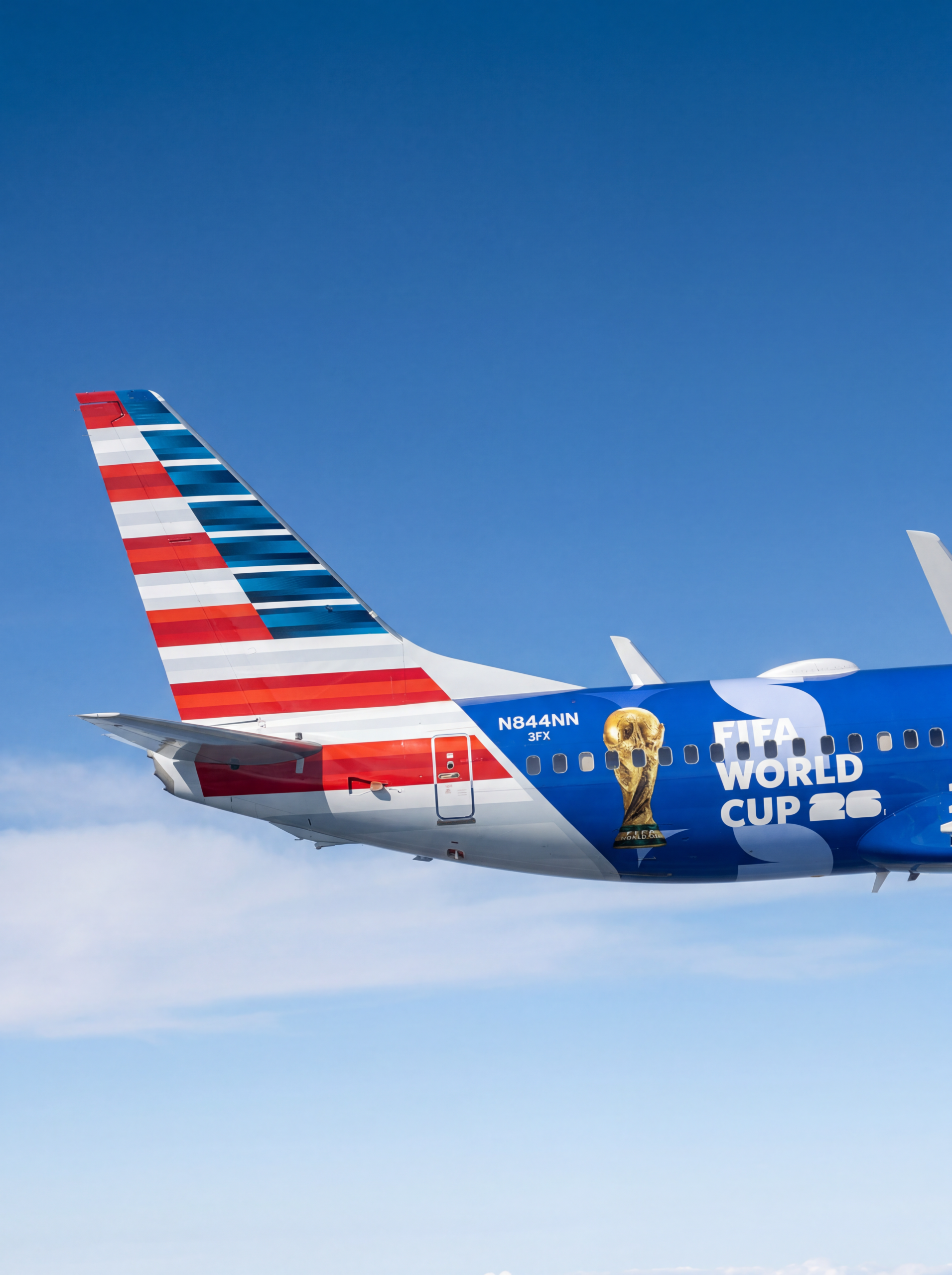
If you have any summer travel planned this year, there’s one thing worth factoring into your trip before you book anything else: the 2026 World Cup. It kicks off on June 11 — about two weeks from now — and it lands right in the middle of the busiest stretch of the travel calendar. For anyone flying this summer, the hardest part of the trip might not be the destination. It might be the airport.
This is a practical guide to the part of summer travel nobody puts on a poster. We’ll cover what the tournament does to an already-packed season, what Miami specifically is in for, and a few things worth sorting out before you ever reach the terminal.
What the World Cup does to a normal summer travel season
Summer is already the busiest stretch of the year for airports. Now add the biggest World Cup ever held on top of it.
The 2026 tournament is the first with 48 teams. That’s 104 matches across 16 host cities in three countries — the United States, Canada, and Mexico — running from the opening match on June 11 at Estadio Azteca in Mexico City to the final on July 19 at MetLife Stadium in New Jersey. For five and a half weeks, millions of fans will be flying between host cities, often on the same days, often internationally — right on top of everyone’s regular summer travel.
The practical effect is simple. The airports you’d normally pass through in summer will be handling their usual peak crowds plus waves of fans arriving for specific matches, frequently clustered around the same 48 hours. Immigration and customs — already the slowest part of any international arrival — feel that pressure first.
Miami’s summer, by the numbers
If your summer travel runs through South Florida, here’s what you’re walking into.
Hard Rock Stadium in Miami Gardens (FIFA calls it “Miami Stadium” during the tournament for sponsorship reasons) is hosting seven matches, from the group stage through the Bronze Final. The confirmed Miami schedule:
- June 15 — Saudi Arabia vs. Uruguay
- June 21 — Uruguay vs. Cape Verde
- June 24 — Scotland vs. Brazil
- June 27 — Colombia vs. Portugal
- July 3 — Round of 32
- July 11 — Quarterfinal
- July 18 — Bronze Final (third-place match)
That guest list is the part worth noting. Brazil — five-time champions — play here. So does Portugal, with Cristiano Ronaldo. Colombia and Uruguay each bring large, loud traveling fan bases, and the June 27 Colombia–Portugal match is shaping up to be the most in-demand date on Miami’s calendar. There’s also a free FIFA Fan Festival at Bayfront Park from June 13 to July 5, which means downtown is busy even on non-match days.
South Florida has three international airports doing the heavy lifting: Miami International (MIA), Fort Lauderdale–Hollywood (FLL), and Palm Beach International (PBI). Brightline is running during the tournament window, but it doesn’t go directly to the stadium — the nearest stop connects via Aventura Station. In other words: getting to Miami and getting through its airport are two separate logistics problems, and both get tighter on match days.
What 16 host cities means for the airports you’ll fly through
Even if Miami isn’t your final stop, the tournament probably touches your summer travel route. The host-city airports are some of the most congested in North America in a normal July: JFK and Newark for New York/New Jersey, LAX for Los Angeles, Atlanta (ATL — long the world’s busiest airport by passenger traffic), Dallas–Fort Worth (DFW), plus Seattle, San Francisco, Houston, Kansas City, Boston, Philadelphia, Toronto, Vancouver, and three Mexican cities.
Fans following a team city-to-city will be connecting through these hubs constantly. If you have a layover at one of them in late June, you’re sharing the immigration hall and the security lines with people who just flew in for a match. The connection that looked comfortable when you booked it can get thin in practice.
Five things worth doing before you fly
None of this requires a spreadsheet. A little planning goes a long way.
✅ Plan your flights around match days, not just dates
Arriving the same afternoon as a big match means landing into the busiest possible version of that airport. If you can fly in a day early or shift to a morning arrival, you skip a lot of the crush.
✅ Pack for Florida heat and stadium bag rules
June and July in Miami are hot and humid — plan your clothing and hydration accordingly. World Cup venues also enforce clear-bag policies and strict size limits, so check the rules before you pack a stadium bag rather than discovering them at the gate.
✅ Leave real margin for immigration and customs
This is the single most underestimated part of an international arrival. Re-entry and first-entry processing can take well over an hour at peak times, and it’s the first thing to back up when a wave of fans lands together. Build in buffer, especially before an onward connection.
✅ Learn your terminal and connection ahead of time
Know which terminal you land in, where customs is, and how far your connecting gate or ground transport actually is. Large airports are not walkable in ten minutes. Five quiet minutes with a terminal map now saves a stressful sprint later.
✅ Decide how you’re getting from the airport before you land
Rideshare surge pricing and long pickup waits are common after matches and during peak arrivals. Sorting out your ground transport in advance — rather than joining the queue at the curb — is one of the easiest wins of the whole trip.
What an airport concierge service actually does
Worth being plain about this, because “concierge” can sound vague.
An airport meet and greet service sends a greeter to meet you — at the aircraft door or curbside, depending on whether you’re arriving, departing, or connecting. From there, the greeter walks you through the airport and helps you go through the checkpoints: security on the way out, and immigration and customs on the way in, using dedicated or priority lanes where available. They handle luggage, can arrange lounge access during a long layover, and coordinate your chauffeur or ground transport so there’s a car waiting instead of a line.
The honest version: it doesn’t make the airport less busy. What it does is take the parts of summer travel that go wrong under pressure — the immigration hall, the connection that’s too tight, the three bags and the curbside scramble — and hand them to someone whose whole job is moving you through quickly. During a tournament when those exact pressure points are at their worst, that’s the difference between starting your trip tired and starting it on time.
It’s also not Miami-only. Royal Airport Concierge operates at 500+ airports worldwide, which matters if your summer travel follows a team across host cities or connects through an international hub on the way in.
Where the games are, and which airport you’ll land in
A quick reference for the host cities most travelers ask about, with the airport you’ll most likely use:
- Miami → MIA (also FLL / PBI) — Miami airport concierge
- New York / New Jersey → JFK or EWR — New York airport concierge
- Los Angeles → LAX — Los Angeles airport concierge
- Atlanta → ATL — Atlanta airport concierge
- Dallas → DFW — Dallas airport concierge
- Toronto → YYZ — Toronto airport concierge
- Vancouver → YVR — Vancouver airport concierge
- Mexico City → MEX — Mexico City airport concierge
Planning your summer travel around the tournament
The matches are set, the teams are confirmed, and the busiest two weeks of the year for these airports start in mid-June. Whether you’re flying in for a match or just trying to get through your own summer travel without the tournament getting in the way, the move is the same: plan early, leave margin, and know what the airport on your route is actually in for.
If you’d rather hand the airport part to someone else — a greeter to meet you and expedite your way through security, immigration, and customs — Royal Airport Concierge operates at 500+ airports worldwide, including every World Cup host city.
FAQ
How busy will airports really be during summer travel in 2026? Busier than a normal summer. The World Cup runs June 11 to July 19 across 16 host cities, layering waves of fans on top of regular peak-season crowds. Host-city airports and their immigration halls feel it most, especially around match days.
Which Miami airport should I fly into during the World Cup? Miami International (MIA) is closest to the action and has the most international service. Fort Lauderdale–Hollywood (FLL) and Palm Beach International (PBI) are alternatives that can be less crowded.
How early should I arrive at the airport during the World Cup? Give yourself more buffer than usual, especially for international arrivals and any onward connection. Immigration and customs are the first checkpoints to back up when a wave of fans lands together.
What does an airport concierge actually do? A greeter meets you at the aircraft or curb, walks you through the airport, and helps expedite security, immigration, and customs using priority lanes where available. They also assist with luggage, lounge access, and coordinating ground transport.
Does Royal Airport Concierge operate outside Miami? Yes. Service is available at 500+ airports worldwide, including every U.S. host-city airport and major international hubs — useful if your summer travel crosses several cities.

 Français
  English
  Español
  简体中文
简体中文  Русский
  Italiano
  العربية